

And Why Serious WordPress Businesses Outgrow Email Very Quickly
Almost every WordPress website starts the same way. You launch your site, add a contact form, and feel confident that communication is covered. Visitors can reach you, potential customers can ask questions, and support requests land neatly in your inbox. At the beginning, this feels sufficient. The volume is low, the context is fresh in your head, and answering emails feels manageable.
Then your site grows.
Suddenly, you are no longer answering one or two emails a day. You are dealing with pre-sales questions, technical issues, follow-ups, refund requests, partnership inquiries, and people replying to old threads you barely remember. Some messages are urgent. Some require internal discussion. Some are simple and could be handled by anyone on your team. All of them land in the same inbox, mixed with newsletters, automated notifications, and unrelated business email.
At that point, the contact form stops being a solution and starts becoming a bottleneck. You are not running support. You are firefighting messages.
This is the exact moment when businesses realize that communication needs structure, ownership, visibility, and continuity. This is where a help desk system like Awedesk becomes not just useful, but necessary.
When Support Moves From “Someone Will Reply” to “This Is Being Handled”
A contact form offers no concept of responsibility. Someone on the team opens the email. Maybe they reply. Maybe they forget. Maybe two people reply with different answers. Maybe the email gets buried under newer messages. The customer has no idea what is happening on your side. They do not know if their issue is being worked on, who is handling it, or when they can expect a response.
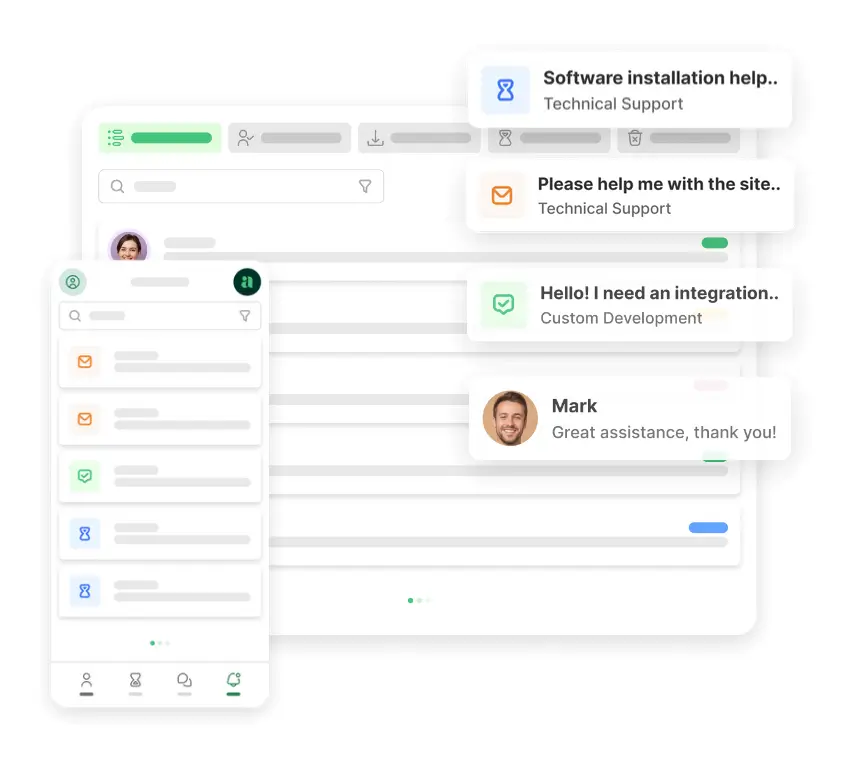
With Awedesk, every inquiry becomes a ticket with ownership, status, and history. The moment a customer reaches out, that request becomes visible to the entire support team. It can be assigned to the right person. It can be prioritized. It can be escalated if needed. It can be tracked until it is resolved. This changes the internal culture of support. Instead of hoping someone replies, you create accountability and clarity. Internally, your team works with confidence. Externally, customers feel that their request has entered a real process.
Imagine a WordPress agency managing support for several client sites. With a contact form, the agency owner might wake up to twenty emails, each requiring context switching, manual forwarding, and internal coordination. With Awedesk, each request is already categorized, assigned, and visible. A billing question goes to finance. A technical bug goes to the developer responsible for that project. A pre-sales inquiry goes to sales. Nothing falls through the cracks. Nothing relies on memory. Nothing depends on who checked the inbox first that morning.
Support Becomes a System, Not a Personality Trait
In many small businesses, support quality depends entirely on one person. If that person is organized, support works. If that person is busy, traveling, sick, or overwhelmed, support slows down or breaks entirely. A contact form ties your support operation to individual availability and discipline. That does not scale.
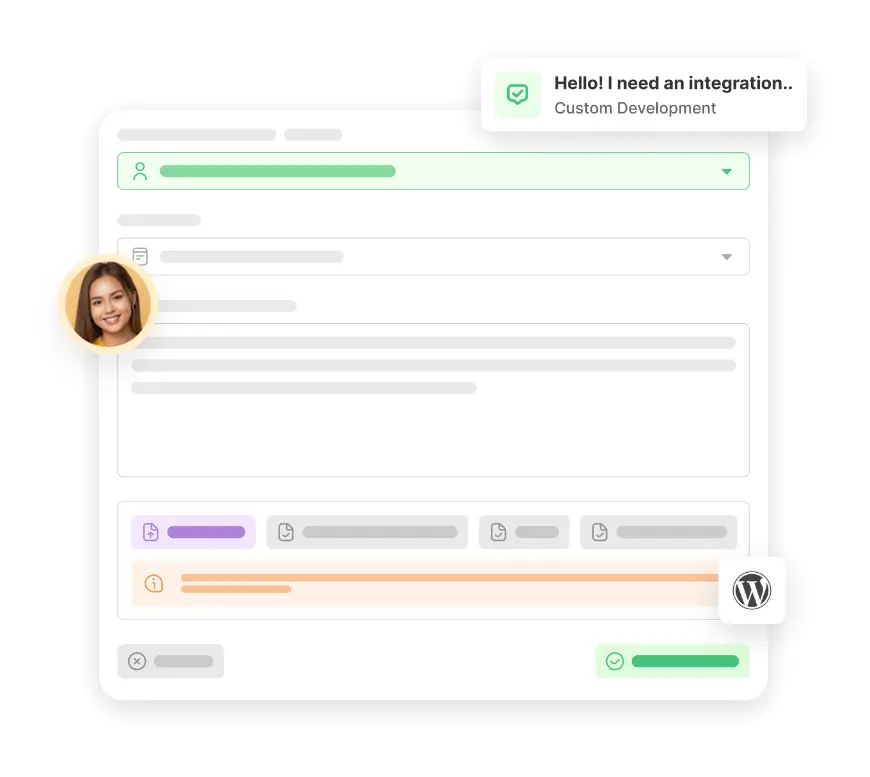
Awedesk turns support into a system. The process exists independently of any single person. Tickets remain visible. Conversations are preserved. Internal notes allow team members to step in without guessing what has already been discussed. If someone is unavailable, another team member can pick up the conversation without the customer feeling abandoned or forced to repeat their story.
This is especially powerful for businesses that operate across time zones or with remote teams. Instead of support stopping when someone goes offline, work continues because the system carries the context forward.
Real-World Example: The Cost of Lost Context
Consider a typical scenario with a contact form. A customer writes in about a billing issue. You reply and ask for clarification. Two days later, the customer replies while you are traveling. The email gets buried. A week later, the customer writes again, frustrated that no one replied. You now have to reread the entire thread, remember what was discussed, and apologize for the delay. The customer is already irritated, not because the issue is complex, but because the process felt unreliable.
With Awedesk, that same conversation is a ticket that stays open until resolved. The status shows that it is pending customer input. The moment the customer replies, the ticket returns to the active queue. The system does not forget. Your team does not have to rely on memory or inbox hygiene. The experience feels intentional and professional instead of accidental.
Professional Support Directly Impacts Revenue
Support is often treated as a cost center, but in reality, it is one of the strongest drivers of revenue and retention. People buy more readily from businesses that respond clearly and reliably. They stay longer when they feel supported. They recommend brands that treat them well when something goes wrong.
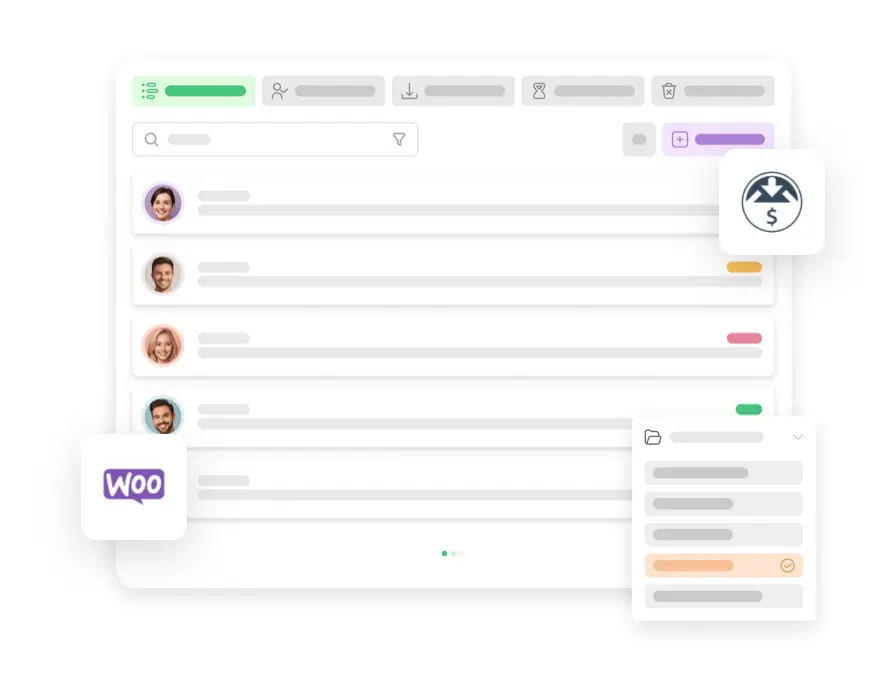
A contact form offers no structure for building that trust at scale. Response times become inconsistent. Issues slip through. Customers start to feel like they are chasing you. Even if your product is excellent, the support experience quietly erodes confidence.
Awedesk creates the conditions for predictable, professional support. Customers receive consistent replies. Issues are followed through. Conversations have continuity. Over time, this builds a reputation that is difficult to replicate with ad spend alone. People do not just buy from you because of your features. They buy from you because they trust that you will still be there when something goes wrong.
Mobility Turns Support Into a Competitive Advantage
Modern businesses do not operate from a single desk. Teams travel, work remotely, attend meetings, and manage multiple responsibilities at once. Waiting to log into WordPress on a laptop to handle urgent support is not realistic in a fast-paced environment.
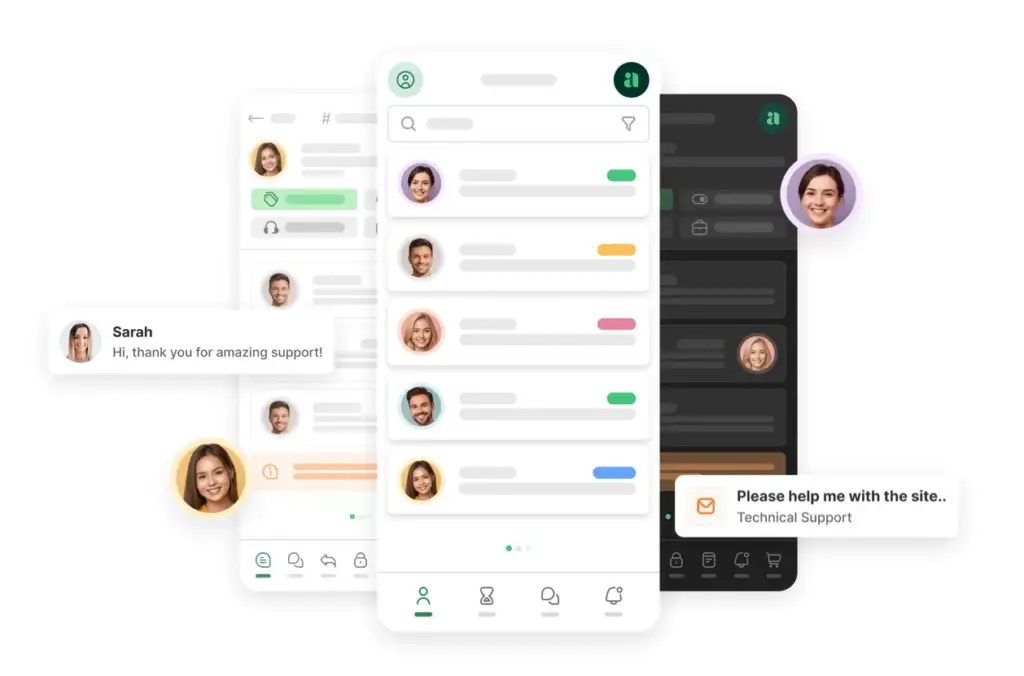
Awedesk also has a dedicated mobile app with push notifications for you and your agents. This means new tickets, replies, and updates reach your team instantly, wherever they are. A critical customer issue does not wait until someone gets back to their desk. A time-sensitive pre-sales question does not get lost because someone was away from email. The ability to respond quickly becomes part of your competitive advantage, not just a convenience.
This is the kind of operational detail that customers may never consciously notice, but they feel the difference when support feels responsive instead of delayed.
From Scattered Emails to Institutional Memory
A contact form creates conversations that live in individual inboxes. When someone leaves your company, their email history often leaves with them. Institutional knowledge disappears. New team members start from zero. Customers are forced to repeat themselves.
Awedesk creates institutional memory. Every ticket becomes part of your support knowledge base. Patterns emerge. Recurring problems become visible. Training new support staff becomes easier because real cases exist in the system. Over time, your support operation becomes smarter, not just busier. You start improving processes instead of just answering questions.
Owning Your Support Infrastructure on WordPress
Many businesses outsource their support systems to external platforms that feel disconnected from their actual product and website. This often introduces friction, fragmented workflows, and unnecessary complexity. Not to mention in a lot of cases that comes with a huge cost.
Awedesk lives inside WordPress. Your support system is part of your platform, not a separate universe. This creates tighter integration with your users, your content, and your workflows. You maintain control over your data, your processes, and your customer relationships. Support is not something that happens “somewhere else.” It becomes part of how your business operates.
Exceptional Value That Scales With Your Business
Beyond workflow, organization, responsiveness and customer satisfaction, the economic case for a purpose-built help desk like Awedesk is compelling on its own. Awedesk offers a single-site license at $199 per year (with the first year at 50% off), and includes unlimited agents, unlimited tickets, and unlimited conversations at that one flat price. In contrast, leading SaaS help desk platforms such as Zendesk, HelpScout, and Freshdesk price support based on per-agent subscriptions which quickly adds up as your team grows. To illustrate:
| Platform | Pricing Model | Cost for 5 Agents / Year | Cost for 10 Agents / Year | Cost for 20 Agents / Year |
|---|---|---|---|---|
| Awedesk | Flat fee (unlimited agents/tickets) | $199 | $199 | $199 |
| Zendesk | ~$59/agent/mo (Suite Team plan) | ~$3,540 | ~$7,080 | ~$14,160 |
| HelpScout | ~$25/agent/mo (Standard plan) | ~$1,500 | ~$3,000 | ~$6,000 |
| Freshdesk | ~$37/agent/mo (Growth plan) | ~$2,220 | ~$4,440 | ~$8,880 |
Even at modest team sizes, the cost difference is stark: with just five support agents, Zendesk runs more than 17× the price of Awedesk, and HelpScout still costs over 7×. At 20 agents, those platforms become an order of magnitude more expensive, while Awedesk remains the same, predictable investment year after year. For growing WordPress organizations, this means professional support without complexity, without per-seat accounting, and without surprise billing. When you invest in Awedesk, you are investing in both capability and cost-efficiency. That is a combination that few other help desk solutions are structured to offer.
The Strategic Shift: From Inbox Management to Business Infrastructure
The real difference between a contact form and Awedesk is not features. It is mindset. A contact form treats communication as an afterthought. Awedesk treats support as infrastructure.
Infrastructure is what allows businesses to grow without breaking.
Infrastructure is what allows teams to collaborate without chaos.
Infrastructure is what turns good intentions into reliable outcomes.
If your WordPress website is more than a hobby, your support system should be more than a mailbox. Awedesk gives you structure, accountability, continuity, mobility, and professionalism. It replaces reactive inbox management with an intentional support operation.
A contact form helps people reach you.
Awedesk helps you run support as part of your business strategy.
And businesses that treat support as strategy, not an afterthought, are the ones that scale with confidence. What are your thoughts on this?

Customer Service Solution You Deserve




Reactions & comments
Comments